
BLACKSITE RETRIEVAL
Solo Project ● Unreal Engine 5.7
Team Size: 1
Engine: Unreal Engine 5.7
Tools used: Third Person Shooter Kit, Adobe Illustrator, Perforce
Models: Meshes modeled in-engine, Low Poly Nature: Essentials (Vertex Rage Studio)
Narrative Overview
Set during the Original Trilogy era of Star Wars, you play as an undercover stormtrooper on a rescue mission inside an Imperial blacksite, infiltrating the facility, sneaking through vents, uncovering a secret kyber-powered weapons operation, and fighting through engineering spaces to reach the prison. The level emphasizes cinematic progression, clear environmental storytelling, and escalating reveals as you move from security and oversight areas into the reactor, containment, and detention sections.
Full Walkthrough
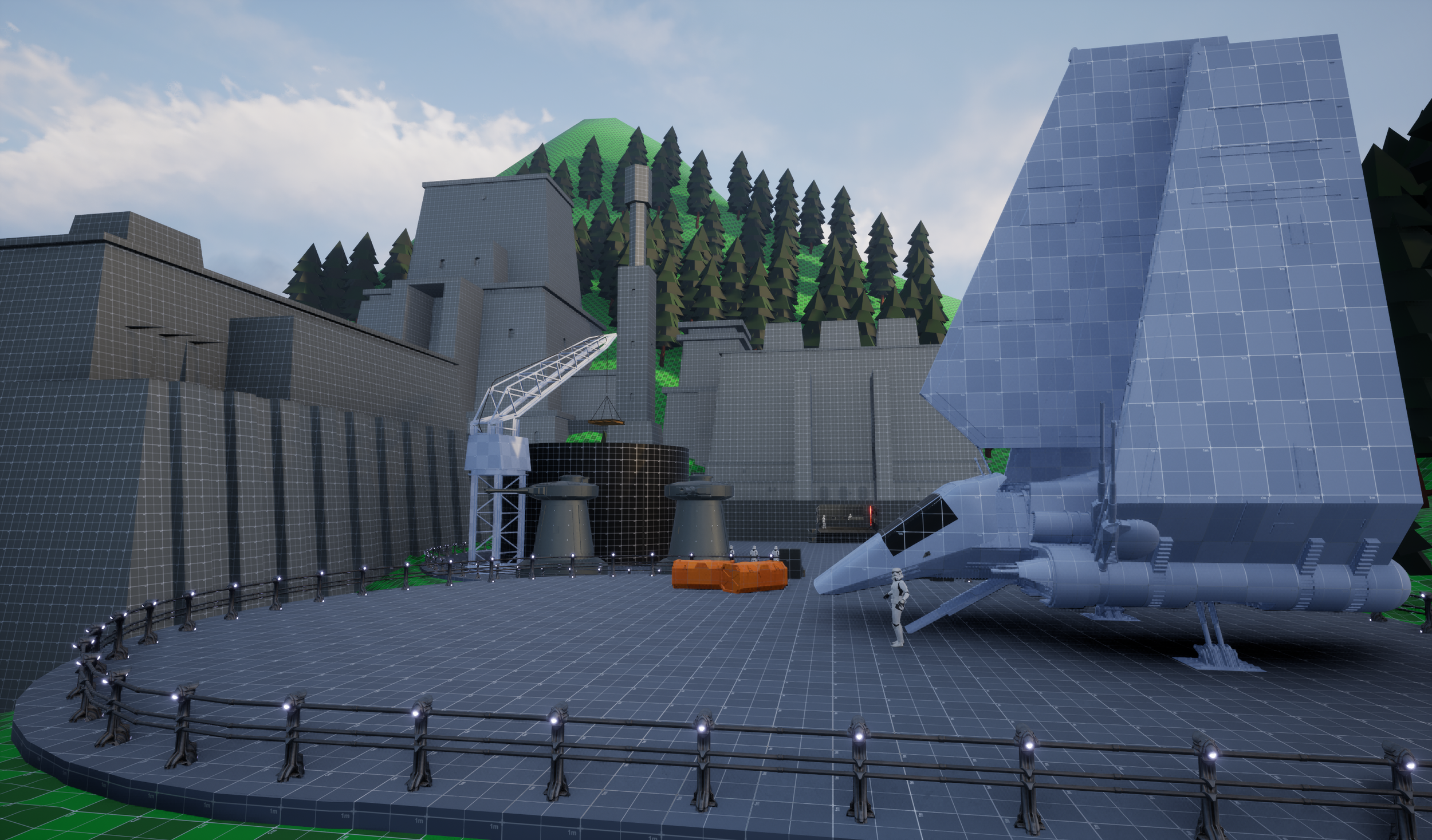
Level Layout
Scripting
BP_Door
BP_Door is a reusable interactive door blueprint that opens and closes based on player proximity or scripted progression. It was built to support the level’s Imperial facility fantasy while also helping control pacing, gating, and flow between spaces.
BP_Hologram
BP_Hologram manages the level’s holographic map and display elements. It activates when the player approaches, helping reinforce the fiction of the facility while also supporting orientation, environmental storytelling, and key narrative reveals.
BP_ObjectiveManager
BP_ObjectiveManager controls the player’s mission objectives and updates the on-screen objective text as the level progresses. It also supports mission-related audio cues, helping tie together gameplay progression, narrative guidance, and UI feedback in a centralized system.
Objective Text
Mission Overview
BP_TIEBoss
BP_TIEBoss controls the level’s TIE Fighter boss encounter. It handles the boss’s movement, rotation, damage reactions, and defeat state, allowing the encounter to function as a contained gameplay sequence with clear escalation and resolution.
Design Process
My goal with this level was to create a cinematic Star Wars infiltration experience centered around readability, progression, and environmental storytelling. I wanted the player to feel like they were uncovering more than they were supposed to as they moved deeper into the blacksite, starting with a straightforward rescue objective and gradually discovering a hidden kyber-powered weapons operation. The level was designed to guide the player through a sequence of distinct gameplay beats, including security clearance, alternate routing through vents, engineering combat, narrative reveals, and the final prison rescue, while maintaining clear pathing and a strong sense of place. Across the blockout and scripting work, I focused on making each space feel purposeful.
Reference Board
Metrics
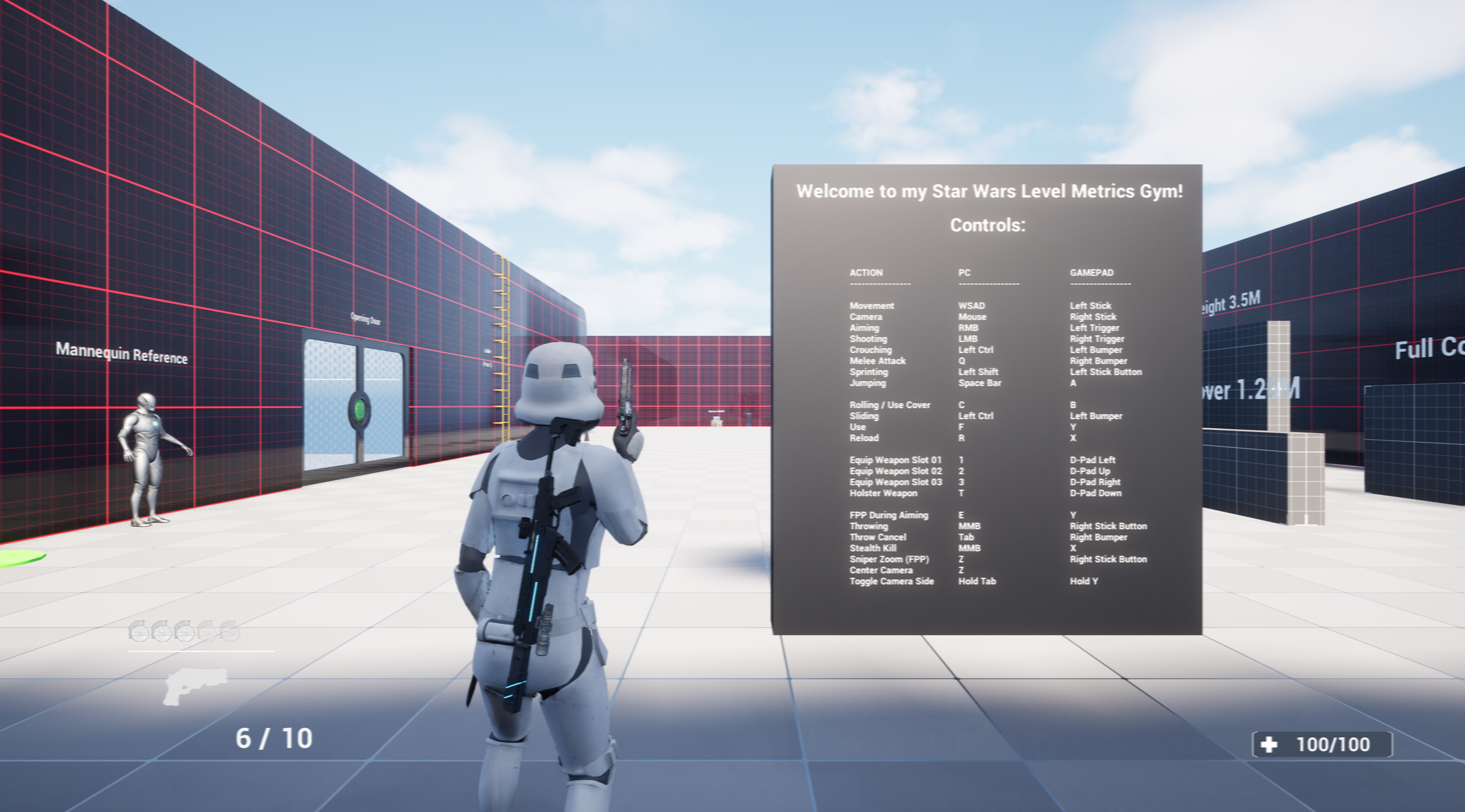
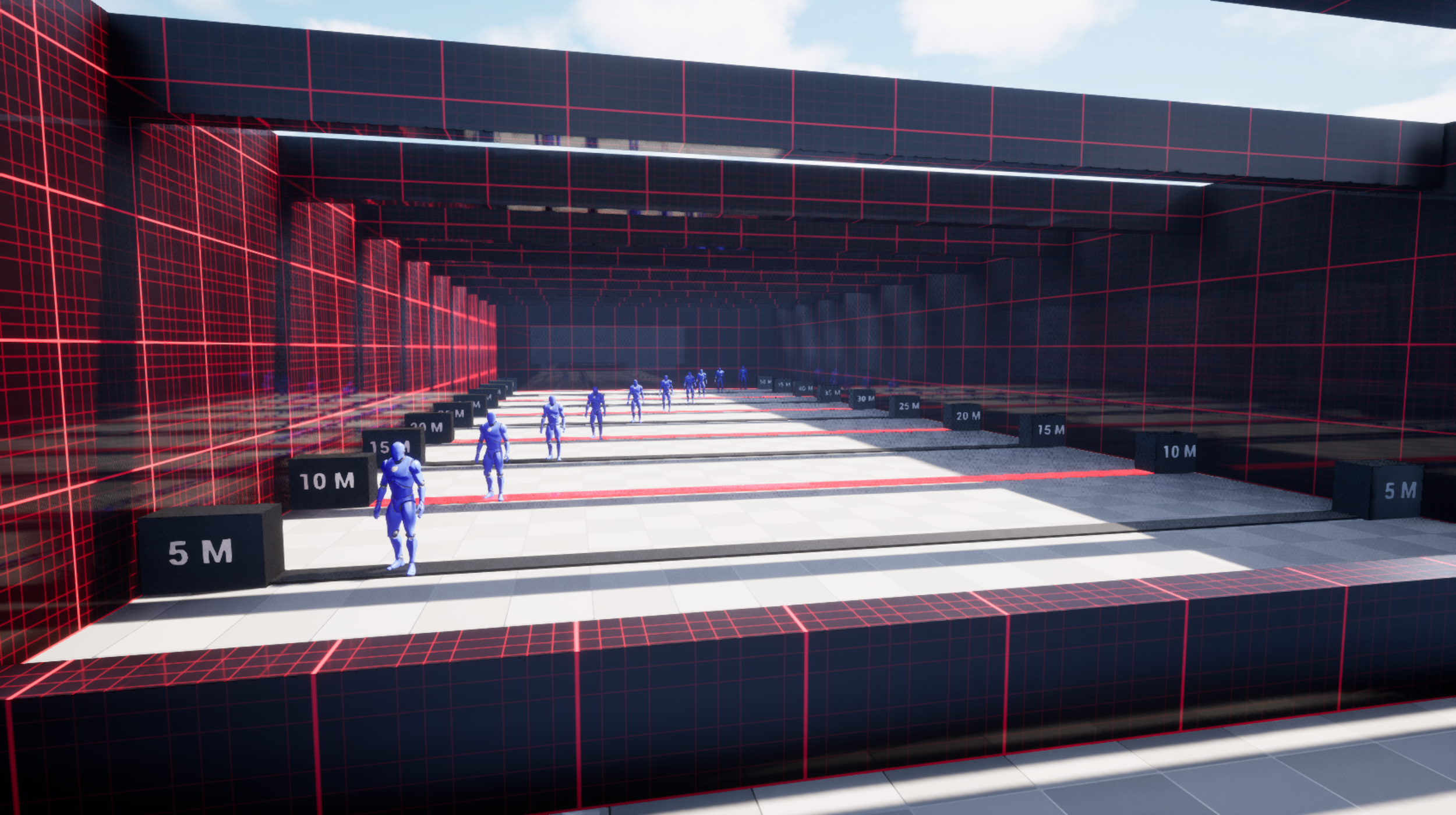
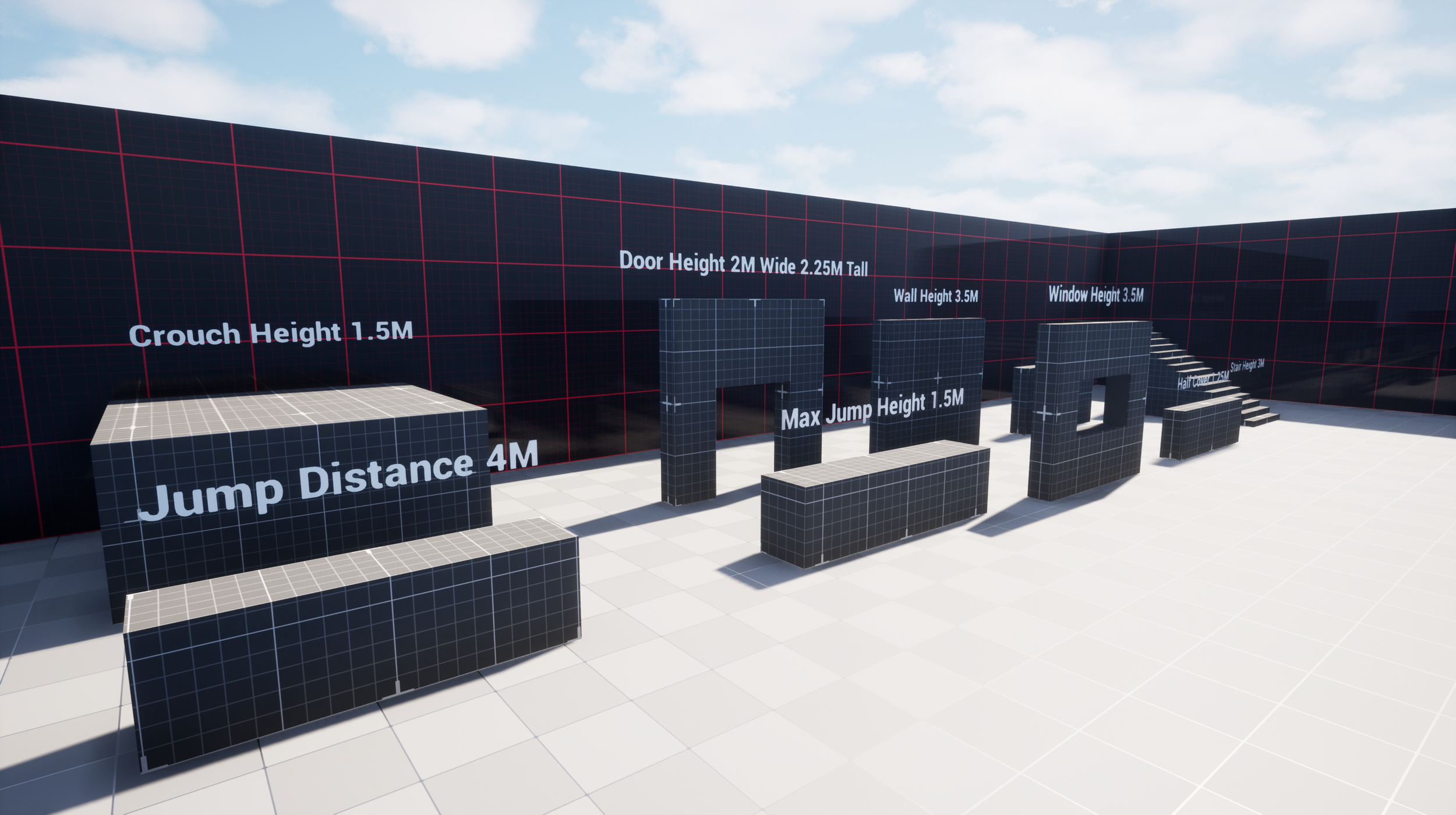
After creating my initial layout and reference board, I built a metrics gym to lock down the scale and movement rules for the level. This helped me test and validate key dimensions such as doors, walls, cover, jumps, crouch spaces, stairs, and traversal spacing before carrying those measurements into the full blockout.
Some of the core metrics included:
Player walk speed - 3.5 m/s
Player jog speed - 4.2 m/s
Player sprint/run speed - 6.5 m/s
Player jump distance - 4 m
Max jump height - 1.5 m
Crouch height - 1.5 m
Wall height - 3.5 m
Window height - 3.5 m
Full cover height - 2 m
Half cover height - 1.25 m
Stair height - 3 m
Door height - 2 m wide x 2.25 m tall
Iteration
Iteration #1
Iteration #1 - Landing Area
My first pass on the landing area established the core footprint and central security checkpoint, but the space felt too open and vague in how it communicated progression. While the circular checkpoint created a strong focal point, the surrounding layout did not clearly differentiate where the player should go next or what each adjacent space represented.
Iteration #1 - Reactor Room
My initial reactor room blockout focused on establishing combat space, cover, and the broad industrial tone of the engineering section. It communicated the general idea of a reactor environment, but the room lacked enough layering, density, and architectural structure to fully sell the scale and function of the space.
Iteration #2
Iteration #2 - Landing Area
In the second iteration, I simplified the center and restructured the room to improve readability, compartmentalization, and navigation. Replacing the heavy central checkpoint with a lower, more purposeful focal element opened sightlines, clarified the surrounding destinations, and made the space feel more like a readable Imperial hub rather than a single large undifferentiated room.
Iteration #2 - Reactor Room
In the second pass, I pushed the room further toward a more believable and visually distinct Imperial engineering space by adding stronger overhead pipework, more developed machinery silhouettes, and clearer spatial framing. These changes helped the room feel denser, more intentional, and more thematically tied to the hidden kyber-powered operation, while also improving the combat readability and sense of progression through the space.